RSS

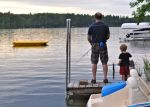
Julian + Daddy.

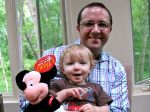
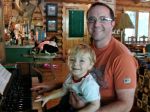
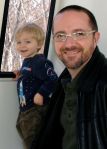
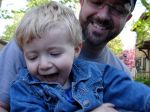
Today is Father’s Day. Today I’m remembering and appreciating how Julian’s too-short life was filled to the brim with love and attention from his daddy.

I wanted to share some photos that offer just a glimpse of the special connection they had. Sadly, I never caught a photo of them in the kitchen together (Julian loved to watch John cook) — but the ones of them fishing together are some of my favorites…

S L I D E S H O W

This slideshow requires JavaScript.

G A L L E R Y
 
5 Comments

Posted by on June 19, 2011 in month 4


Tags: , , , , , , ,

How do you plan a child’s funeral?

Let me start by stating the obvious: No one wants to talk, read, or think about a topic like planning a child’s funeral. But this blog is all about addressing the unthinkable, and that’s what I’m writing about today. So, how did we do it? How do you design an event to commemorate your worst fear? The first thing we did was eliminate the word “funeral.” Instead we called it a Celebration of Life. That was 3 months ago today.

As I think back on that day, exactly 3 months ago, I remember that the feelings of love and support were overwhelming (in a good way). Hundreds of people came. Family, friends, clients, acquaintances, and total strangers from Minnesota — plus family and friends flew in from California, New York, Connecticut, Ohio, and Colorado. One of John’s best friends even used a year’s worth of vacation days to drive up from Kentucky. The event itself was exactly what we wanted it to be.

We were comforted by positive feedback from the guests as well. Last week I had lunch with a friend who attended Julian’s Celebration, and she also had recently attended a funeral for her cousin’s son. She shared with me some of the differences between the two services: Julian’s Celebration was uplifting and healing for her, the other one was painful. Julian’s service made her feel as if she knew who Julian was (even though she had only met him a couple of times), the other service didn’t reveal much about who the child was.

My friend encouraged me to share some details about Julian’s Celebration so other bereaved parents, like her cousin, might find inspiration and assistance when they have to do the impossible: plan their own child’s funeral. I’ve been wanting to capture some of those memories anyway, so I started thinking about it.

Let me start by telling you a few things my husband and I did NOT do:

  • We didn’t call it a funeral. Right from the beginning, we called it his Celebration of Life. “The Celebration” for short.
  • We didn’t rush into it. Some people follow a specific schedule for the events surrounding a death, based on their religious beliefs and family traditions. We didn’t feel obligated to follow any specific schedule, so we took our time and planned the event for the date that felt right to us: his 4th birthday. It was nine days after his death.
  • We didn’t have an open casket. In fact, we didn’t have a casket at all. We had him cremated, but didn’t have the ashes at the ceremony. I agree with C.S. Louis when he said,  “You don’t have a soul. You are a Soul. You have a body.” Julian’s body was the container for his Soul, and he didn’t need it anymore. It didn’t need to play a role in the Celebration, in any form.
  • We didn’t let anyone take over. At the time of the planning process, we were surrounded by people who wanted to help us any way they could. It would have been easy to find some sort of template or find someone to plan the funeral on our behalf, and in many ways would have been easier. But nothing was easy in those first days. Everything was hard. Given the choice between not-easy Celebration planning, or not-easy anything else, I chose to focus on the planning. And I’m glad I did, because the things that initially seemed hard ended up being surprisingly therapeutic.

And now for the things my husband and I DID do:

  • We were inspired by a Dr. Seuss quote. Someday* I’ll write more about how the quote presented itself to me in the first place, but the short story is that I came across a quote that said, “Don’t cry because it’s over… Smile because it happened.” The fact that it was a quote from Dr. Seuss made it even more perfect, and we decided to make it the theme of the Celebration. Not because we didn’t believe that crying is an important part of processing emotions, but because we wanted the Celebration itself to be focused on what a wonderful gift he was to us. We wanted to remember his life, and we wanted to smile.
    *NOTE: I wrote more about this in a later blog post.
  • We designed the experience. John and I both have a background in design, and our business is focused on designing experiences. Even though each element took effort, I was grateful for the opportunity to apply the skills and strengths that I have as a creative professional to design the details of the event. Everything I created — posters, program, slideshow, and a keepsake photo we gave the guests — was designed with common elements: the Dr. Seuss quote, the little spaceman illustration from the pajamas he was given in the hospital, and the color red (Julian’s favorite color).
  • We asked people to wear red. We wanted the event to be lively and celebratory. It was so perfect that Julian’s favorite color was red (despite the fact that by the age of 3, almost all boys will tell you their favorite color is blue). The whole church was a sea of red, because in every announcement of the event we included this sentence: “Guests are encouraged to wear red, Julian’s favorite color.” What didn’t need to be said was, “Don’t wear black.”
  • We used music throughout the service. Overall, the music was amazing. We stayed away from sad, melancholy songs (perhaps with the exception of the song I chose for the photo slideshow — a track from Julian’s favorite CD of lullabies). The musical highlight was a song written and performed by Molly Dean Anderson, who also lead us all in singing “Happy Birthday” at the end of the service.
  • We chose speakers who knew and loved Julian, starting with my husband. When John announced that he wanted to speak at the Celebration, I tried to talk him out of it. But it was important to him, and he wrote a beautiful message. When it came time to share his message, he had Oscar join him as he spoke about bravery and what it means to be a hero. My two brothers and John’s sister also shared touching, beautiful messages about Julian.
  • We really, truly celebrated his life. The Celebration was held in a church, but the service was intentionally non-churchy. It was important to us that the Celebration was focused on our son, not on religious tradition. In addition to Julian’s dad, uncles, and aunt, we asked two long-time family friends to participate in the service. First, Georgann Fuller offered beautiful words of wisdom from her own experience of losing her husband many years ago, and she read a poem that has become deeply meaningful to me. Later, the “sermon” part of the service (the Meditation) was delivered by Don Portwood, who has known me since I was young, officiated our wedding, was with us at the hospital as Julian went in for surgery the day after his diagnosis, and was at the hospital with us the day Julian died. Don included a poem by Rumi in his meditation, and it was perfect. Everyone who participated in the service was clearly filled with love for Julian and our whole family. The service was truly a “Celebration of Life.”

Planning an event to honor a child’s death is not something anyone ever wants to do. And it’s certainly not anything anyone wants to be good at. But I followed my instincts, and found solace in the “work” of it. I wanted the event to be focused on sweet Julian’s short life, but also on love and gratitude for life in general. It was exactly what we wanted. And I wouldn’t have changed a thing.

And now for some special thanks:
  • Don Portwood — for delivering the perfect message in the service, and for being so much more than a friend-slash-pastor.
  • John, Dan, Alex, and Jennifer — for so eloquently writing and speaking about their memories of Julian.
  • Georgann Fuller — for traveling from California and contributing such a wise and important message of survival and love.
  • Molly Dean Anderson — for writing a song specifically for the event, and performing it like an angel (and the other songs, too).
  • Jeff Lindsay, Anne-Marie Finsaas, and all at Colonial Church of Edina — for your contributions to the service, and providing such a beautiful and welcoming environment for the event.
  • Lili Korbuly — for capturing the event in beautiful photographs.
  • Bastian Skoog & Queen of Cakes — for the beautiful flowers at the front of the church, and the delicious birthday cake served after the ceremony.
  • Everyone who sent flowers — because even though we said we’d prefer a donation to Julian’s fund, the abundance of red floral arrangements was breathtaking.
  • Friends and family — for folding programs, stuffing envelopes, hanging balloons, serving cake, and keeping us sane.
  • Everyone who flew in for the event — especially my cousin Sarah, who has always been like a sister to me.
  • Every single person who attended, and those who couldn’t attend — because your love and positive energy made the event a true Celebration.
  • Last but not least: Julian — for being my inspiration and motivation, not only for the Celebration, but for the rest of my life.
 
20 Comments

Posted by on June 12, 2011 in month 4


Tags: , , , , , , , , ,

The circle of life in our back yard.

Spring has finally arrived in Minnesota. All around us we see signs of rebirth. But this year, I’m also painfully aware of the flip side… we can’t appreciate new life without acknowledging the inevitability and significance of death.

This circle of life is literally on display in my back yard. About four years ago, we noticed that a pair of foxes would appear in our yard from time to time. When the snow started to melt, we realized they had created a den under the trees and brush.

Daddy Fox near the entrance of the den.

A couple of months after the foxes moved in, they had babies! We had seen a lot of wildlife in our wooded neighborhood, but never anything as cute as this. Our whole family was excited to see the little “kits” grow from little balls of fluff to the size of a small dog. As the weather got warmer and the grass and brush started to grow in, the babies would come out to play.

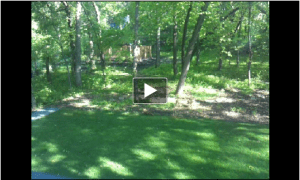
We were delighted when the foxes returned the next year, and the next. The boys loved to watch them from the kitchen windows:

Click to see video of last year’s fox babies.

But this winter, I didn’t see the foxes like I had in the past. I worried that they had decided not to come back to us this year.

But then I finally saw the daddy fox. He appeared the morning after Julian died. Somehow, he looked both confident and carefree as he trotted through the yard. He reminded me of my strong, sweet little Julian.

During those first days of the “after,” I’d often look out the kitchen window toward the fox den. Through my fog of shock and grief, I admired this pair of faithful, committed fox parents. I felt honored that they had picked our yard as the safe place to give birth and raise their little ones, especially this year.

As the snow melted, I’d search for signs of babies. I was surprised I hadn’t seen them yet. Did they pick a different den this year? Did they not have babies this year? Something seemed off. And then on Easter morning, I saw a little mound of brown fluff moving around. A fox baby! I felt relieved. Nature had once again come full circle. And how fitting to have the first sighting on Easter.

I only saw one baby on Easter, but I assumed there must be more. In past years, we had always seen at least 3 or 4 kits. But I kept seeing only one at a time, never a group playing games and tackling each other like in the video from last year. And then just this week, it hit me: there is only one baby this year.

The fox mama that had raised her family in my yard year after year, the creature that I somehow felt kinship with, had ONE BABY. One. She most likely gave birth to at least one more, but only one made it. One. Just like me. There used to be more, but now there is one.

I wondered if this “only child” fox baby would be different, growing up without brothers and sisters to play with. But this week I saw something amazing. I was standing in my kitchen, and something caught my eye outside. A small pack of deer were eating their way through our yard (this is not an uncommon occurrence). But then I noticed something else: the fox baby was “hunting” one of the fawns. It was a showdown between baby fox and baby deer. The kit clearly had developed his instinct to hunt, but hadn’t yet quite learned how to identify appropriate prey. I took a (blurry) picture of this unbelievable and hilarious scene:

Battle of the babies: Fox vs. Deer

This little fox was focused and determined. He was brave. He was like Oscar — exploring life on his own, finding his own interests, discovering his natural instincts.

The fox family reminds us that the circle of life will always continue, even if it doesn’t quite fit our picture. The average litter is 4-6 kits, but sometimes there is only one. Sometimes, the promise of new life gets taken away too soon. We may not have the future we planned, but that doesn’t mean we are defeated. It reminds us to be stronger, braver, and more motivated to make the most of life.

The foxes returned the morning after Julian died. For the first time, there was only one baby. These were not coincidences. Instead, these were just the first of several signs that there is something bigger at work here. Call it God, the Universe, Mother Nature. No matter what you call it, it is significant. It is meaningful. It is the circle of life.

I’d love to know who visits my blog, and I’d especially like to know if you have any thoughts or comments about it. If you’d like to post a comment about this specific post, click the “Comment” link below. Or, leave a general comment on my Guestbook Page.

.


1 Comment

Posted by on May 20, 2011 in month 3


Tags: , , , , , , , , ,

The choice to survive.

Have you ever bought a new car, and from that point on, you see those cars everywhere? I’ve noticed that I’m experiencing a similar phenomenon: I’m searching for meaning and insights about life, and I’m seeing them everywhere. In books, at the movies, around my dinner table.

Last night, we had some of our best friends over for dinner. And at one point I realized, almost every single one of us had lost a parent or child to cancer, and/or have a parent currently fighting cancer. One friend is also a cancer survivor herself. Another friend shared that his mother was diagnosed just this past week, and they were waiting for more test results.

We had a great evening, filled with laughter and wonderful food (made by my husband, the chef of the family). But it was also a reminder of how pervasive cancer is, and how ruthless. As I looked around the table, I was suddenly aware of the strength of this group of people. Here we were, each of us with several good reasons to be angry and sorry for ourselves. But instead, we were strong. We were survivors. We had been victimized by cancer, but we weren’t victims.

Today, I saw the movie Bridesmaids with a bff. And again, I noticed a profound life lesson weaved into the many hilarious scenes. The main character, Annie, has a series of “setbacks” as her best friend is preparing to get married. As her friend’s wedding day approaches, Maid of (Dis)Honor Annie struggles — until one of the other bridesmaids confronts her: “I don’t associate with people who blame the world for their problems,” says Megan to Annie. “The world isn’t the problem… YOU are the problem. But you are also the solution.”

And then Megan proceeds to tackle Annie and pin her against the couch. “What are you DOING?” screams Annie to the husky woman tackling her. “I’m your LIFE, Annie. FIGHT BACK!” yells the bridesmaid in Annie’s face. Eventually, Annie finds her will to fight back and get this crazy (hilarious) woman off of her. (Or something like that… I wasn’t taking notes at the time. But I do strongly recommend the movie, so go see it and tell me if I’m remembering the scene incorrectly.)

This movie, and my friends at dinner last night, reminded me of two things. First, it feels great to laugh. And second, life isn’t fair. Life is hard. Life often challenges us and makes us want to give up. Sometimes life just plain sucks. But we can choose to find our will to survive, and FIGHT BACK with everything we have… or choose not to. But either way, it’s a choice. It’s our choice.

And sure, “our loss” provides me a great excuse for defeat. Some people appear genuinely surprised when they first see me out and functioning in my daily life. But why would I choose defeat, why use that as an excuse? Couldn’t “our loss” be just as effective as a motivation to “fight back” for a joyful life again? Why not focus the emotion and energy into becoming more aware and engaged with life?

We all have our losses. My loss is a lot more public and significant than most, but I had “losses” before Julian died, too. And I’m sure I’ll have more “losses” in the future. We all will. That’s the point of life. It’s a cliché because it’s true: You can’t have ups without some downs. But with each loss, big or small, public or private… we don’t have to surrender and become a victim of our lives. We have a choice.

We can’t control whether or not we are “victimized” (verb) by others or by life in general, but we CAN control whether or not we are “victims” (noun). We have to CHOOSE to be survivors, and take action. And as my friends and I discussed at dinner last night and after the movie today, when we are faced with the ruthlessness of cancer — or any other significant challenge that life throws at us — we have to make a choice: Survive, or not survive. Option A, or Option B.

I choose Option A. I choose to survive. I am a survivor (noun).

I’d love to know who visits my blog, and I’d especially like to know if you have any thoughts or comments about it. If you’d like to post a comment about this specific post, click the “Comment” link below. Or, leave a general comment on my Guestbook Page.

.


1 Comment

Posted by on May 14, 2011 in month 3


Tags: , , , , , , , , ,

There goes Mother’s Day.

Today was a good day. Today was a hard day. Today was Mother’s Day.

Today started with a wonderful brunch, followed by our annual visit to the Minneapolis Sculpture Garden. As I described in my previous blog post, we created this tradition a few years ago. We walk around, admire the art, and my husband takes photos.

Mother's Day 2011

Mother’s Day 2011

With Oscar’s cheerful commentary and laughter, it wasn’t hard to smile for the photos. But inside, I felt sad. I wanted Julian with us in person, not just in spirit.

Julian always hated getting his photo taken, and was always a troublemaker on days like this. I’d give anything to have had him making trouble today, but I’m thankful for this memory of him. Remembering how he squirmed and refused to smile also means remembering his personality, not just his face. He was sweet and opinionated and clever. He loved tortellini, action figures, and the color red. He loved his Mommy. Those are the things I will  remember on Mother’s Days of the future.

I felt Julian with us today, in his own way. In his “new normal” way.  Whenever I look at this portrait, I will feel that feeling and know that both of my boys were with me that day. And it will remind me of everything it means to be a mother: happy and sad things, physical and non-physical things, easy and hard things. I’m grateful for all of it.

I’d love to know who visits my blog, and I’d especially like to know if you have any thoughts or comments about it. If you’d like to post a comment about this specific post, click the “Comment” link below. Or, leave a general comment on my Guestbook Page.

.


1 Comment

Posted by on May 8, 2011 in month 3


Here comes Mother’s Day.

They say that the first year after you lose a loved one is the hardest. It’s the holidays, I hear, that are the most painful times of the year. Birthdays, anniversaries, and holidays with special meaning — like Mother’s Day — are particularly tough. And here it comes, just couple days away.

I’m sure many people are wondering how Mother’s Day will be for me this year. I’m wondering, too. I have such happy memories from past Mother’s Days. A few years ago we started a tradition of going to the Minneapolis Sculpture Garden to enjoy the beautiful art and gardens, and take photos together. We plan to keep up the tradition this year, too. I’m looking forward to it.

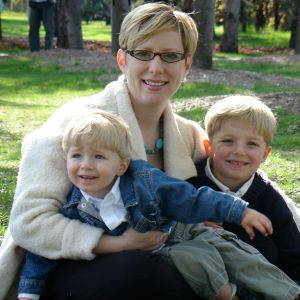
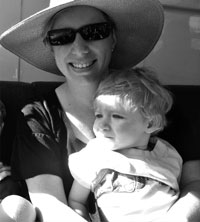
Before Mother’s Day 2011 arrives, I wanted to take time to reflect on the past 3 years that I had with both of my sons. I’ve been thinking a lot about the past few years, and how thankful I am that we took the time to capture the special day in photos. I also really appreciate my husband’s wonderful photography skills:

Mother’s Day 2008

.

Mother’s Day 2009

.

 Mother’s Day 2010

.

I’m sure Sunday will have its sad moments. But I know it won’t be *full* of sadness. I’m committed to enjoying a day that is not just focused on me, but also on the two boys who taught me what being a mother really means.

Julian won’t be in our photos this year, but I know he will be with us. And I’m looking forward to that.

p.s. I added a “Guestbook” page to my blog today. I’ve you’d like to leave a general comment, that would be a great place to do it.
Or, to leave a comment on this specific post, use the “reply” box or “comments” link below.


6 Comments

Posted by on May 6, 2011 in month 3


The new science of bereavement.

Today marks the two-month anniversary of Julian’s death. It feels like a lifetime ago. That was the end of “old normal.” That was when my life changed forever. 

The first month was mostly numbness, shock, and deep grieving. The second month was about grieving too… but also seeking, learning, discovering. I’m a different person today than I was two months ago.

As I think back on this second month, I can appreciate how hard I’ve worked to learn about grief and to find meaning in this experience. Long talks with my mom, my friends, and my therapist has helped me honor Julian’s memory and appreciate the time I had with him. Writing this blog has helped me process my thoughts, and really understand how I feel. It hasn’t been easy to take this aggressive approach to my “grief work,” but I’ve been trusting my instincts and working through the grief.

Ironically, my challenge now is that my progress makes some people suspicious and uncomfortable. I don’t fit the picture of what a bereaved parent is supposed to look like. There are people in my life who are concerned that I’m not grieving enough.

These people, and so-called “grief experts” that have written the books I read, seem to discourage my pursuit of happiness. Comments that seem supportive on the surface, such as “You’re so STRONG,” seem to be laced with judgment. I’m warned that what I perceive as progress is probably denial. I’m accused of not “feeling my feelings.” Some comments even suggest that the amount of my suffering is proportional to my love for the one I lost — in other words, less-than-average suffering must mean less-than-average love.

The latter example is easy to ignore, because I have no doubts about the love I had, and will *always* have, for Julian. But what about denial? Is it possible that I’m not really feeling my feelings? Is it possible that any day now, I’m going to suddenly curl up in the fetal position with some new understanding of what has happened?

Despite my confidence in my process and my “grief work,” I started to get paranoid. So I obsessively began buying books, hoping that I’d finally come across something that would make me feel less unusual. Less odd. Less suspicious.

Do a search for “grief” on Amazon.com and you’ll get over 19,000 results. So far, I’ve read about a dozen of them. Topics have covered loss of a child, grief in general, life after death, and science. And it’s the last category — science — that gave me what I was looking for. Rather, a good friend gave me the book I was looking for: “The Other Side of Sadness” by George A. Bonanno. The subtitle is, “What the New Science of Bereavement Tells Us About Life After Loss.”

This “new science of bereavement” changed everything.

This book explained why so many other books haven’t been helpful to me:

There is no shortage of books on grief and bereavement. Most take a surprisingly narrow perspective, avoiding the bigger questions. One reason is that many of the books on grief are written by medical practitioners or therapists. This is not surprising, but it does create a bit of a problem when we try to understand grief in broader terms. Grief therapists are apt to see only those bereaved people whose lives have already been consumed by suffering, people for whom professional help is the only chance of survival. These human dramas may be compelling, but they do not tell us much about what grief is like for most people.

This book confirmed that there are other people like me who have had the same frustration:

Many who volunteer for our studies make the point that they tried to read up on bereavement. They quickly add, however, that they couldn’t seem to find anything in their reading that matched their own experience.

This book validated that it is not uncommon for people around me to have the reactions that I’ve experienced:

Inherent in [books and journals on bereavement] is also the assumption that grief is more or less the same for everybody and that there is something wrong when people overcome their grief quickly or when they appear to have skipped some of the “stages” of mourning. Armed with these ideas it is easy to become suspicious when a bereaved person seems too happy or at ease. “Is this some sort of denial?” we may wonder. Or worse, maybe the person never really cared about the loved one in the first place? Or maybe, without help to get in touch with the grief, she or he will suffer some sort of delayed reaction years from now.

This book chased away my paranoia that those people might be right:

Remarkably, though, after many years of studying bereavement, I’ve found no evidence to support any of these ideas. A good deal of what my colleagues and I have found, in fact, suggest a completely different picture of grieving…. The good news is that for most of us, grief is not overwhelming or unending. As frightening as the pain of loss can be, most of us are resilient. Some of us cope so effectively, in fact, we hardly seem to miss a beat in our day-to-day lives. We may be shocked, even wounded, by a loss, but we still manage to regain our equilibrium and move on. That there is anguish and sadness during bereavement cannot be denied. But there is much more. Above all, it is a human experience. It is something we are wired for, and it is certainly not meant to overwhelm us. Rather, our reactions to grief seem designed to help us accept and accommodate losses relatively quickly so that we can continue to live productive lives. Resilience doesn’t mean, of course, that everyone fully resolves a loss, or finds a state of “closure.” Even the most resilient seem to hold onto at least a bit of wistful sadness. But we are able to keep on living our lives and loving those still present around us.

The book — and the years of scientific data it is based on — supports me in my aggressive pursuit of happiness and joy:

Bereaved people are able to have genuinely pleasurable experiences, to laugh or indulge in moments of joy, even in the earliest days and weeks after loss. Most of the early literature about bereavement tended to gloss over these kinds of positive experience, which were often dismissed as examples of avoidance or denial. My research has suggested the opposite. Not only are positive experiences common, but they also tend to have an affirmative impact on other people and may actually help the bereaved recover more quickly after the loss.

__________________________________________

I’m not unique. I’m not odd. I’m not likely to slip into denial that hasn’t shown up yet. I definitely have many moments (… or hours… or days) of “wistful sadness.” I don’t blog much about my sadness, but it’s a welcome emotion for me. I recognize it as an important part of “feeling my feelings.” But ultimately I’m sad, not destroyed. In fact, each week that goes by brings me a little more appreciation for life.

I’ve completed the first two months of the “after.” I’m two months into the creation of my “new normal.” And I found powerful relief and comfort in the new science of bereavement. It showed me my truth: I’m not in denial, I am RESILIENT.

p.s. All of the quotes in this post are from the first chapter of the book. You can expect more posts about the specific insights that I learned throughout the book, and how they impacted me.
I’d love to know who visits my blog, and I’d especially like to know if you have any thoughts or comments about it. If you’d like to post a comment or just let me know you were here, click the “Comment” link below.


7 Comments

Posted by on May 3, 2011 in month 2


Think about it tomorrow.

As I’ve mentioned in previous blog posts (especially the last one), I’ve been frustrated by the grief resources that I’ve found so far. Most books are focused on the grief itself, and encourage us to dwell in our grief until we are “ready” to take a small step in the direction of health and healing. There’s not a lot out there that focuses on action — yet when I think back on the past 8 weeks, it’s the *actions* that I instinctually took that were the most helpful to me.

The first few days after Julian died seemed to go by in slow motion, yet my brain was going a mile a minute. I couldn’t stop thinking about the last week of Julian’s life. I constantly re-played and obsessively analyzed every detail, repeatedly asking myself, “What if I had done *that* differently?” There were countless “thats,” and none of them were logical.

But logic didn’t stop the loop in my head. Logic had nothing to do with it. I was searching for something that I could go back and change, to result in a different outcome. I wanted to rewind, command-z my life, change history. My brain was on auto-pilot, and was convinced that this would be possible.

The day after Julian died was the worst day of this illogical mental treadmill, and by the end of that first day, my brain needed to rest. I don’t think I was able to make the distinction between logical and illogical thoughts at that point. I just wanted to take a break from thinking, period. My instincts told me that these thoughts — and the suffering they caused — weren’t healthy or helpful. But I couldn’t seem to stop them.

So at the end of the day, it occurred to me that if I couldn’t stop the mental loops, maybe I could distract myself. So I turned on the TV in our bedroom, picked something from the DVR queue, and tried to relax. Yet there it was again: The Voice. It was back on that mental treadmill.

So I took action.

I got up out of bed, found a pad of post-it notes, and wrote this:

I stuck it on the TV just below the screen, and I got back in bed. I vaguely remember giving John a reason for doing this, but I was operating on instinct… I didn’t really have a reason, other than it just seemed like it would be helpful.

And here’s what happened: I would follow the TV show for a few minutes, then my mind would start the loop again. My gaze would drift down from the TV screen — and then I’d notice the bright yellow post-it.

THINK ABOUT IT TOMORROW.

I reminded myself that there was nothing to be gained by thinking about this right now. Maybe tomorrow I’d discover a way to turn back time and change the outcome, but not right now.

Eventually, the number of minutes between loops slowly increased. I don’t think I really comprehended anything on the TV show that first night, but I had taken one small action and it WORKED. It made a difference that night, and every night since then. Each day, the illogical looping got weaker.

Today, thanks to the post-it note and other actions that I’ll describe in future blog posts, the looping has stopped. My brain has given up the hope that it can change the past. But the post-it is still on the TV, just in case I need a reminder.

The post-it is still there, an ongoing reminder to not get stuck in thought patterns that aren’t healthy or helpful — especially right before bed. I can always just think about it tomorrow.
 
3 Comments

Posted by on April 29, 2011 in month 2


Imagine if we treated “mental health trauma” with the same urgency and commitment as physical trauma.

Wikipedia defines a medical trauma as a “serious and body-altering physical injury, such as the removal of a limb.” Psychological trauma is described as “an emotional or psychological injury usually resulting from an extremely stressful or life-threatening situation.” I’m inventing my own variation on these terms: “mental health trauma.” I define this as “a serious and life-altering emotional injury, such as the death of one’s child.”

When I imagine a typical response to a victim of a car accident or other physical trauma, scenes from Grey’s Anatomy and ER flash through my mind:

  • Teams of medical professionals, working urgently and comprehensively until the physical trauma patient is stable.
  • Once the patient is stable, the rehabilitation process starts. Doctors and specialists work as a team to make sure that the patient comes to a full recovery.
  • Physical therapy is often painful, but doctors insist that patients work through the pain to regain as much of their previous abilities as possible, and to learn to adapt to any long-term side effects.

Let’s compare this to someone who has recently experienced a “mental health trauma”:

  • Medical professionals aren’t involved unless the patient seeks them out.
  • No one works urgently or comprehensively with the patient — in fact, they often work cautiously and slowly, if at all.
  • Religious professionals, family, friends, and others sometimes offer advice, but mostly don’t know where to begin because they don’t have the tools. They are afraid to say or do the wrong thing in case they make the patient feel worse.
  • There’s no “mental health trauma standard of care” that could help the patient’s network of professionals, family, and friends to confidently and effectively provide support to the patient.
  • The most frequent advice given to a mental health trauma patient is, “find a support group.”

Next, let’s imagine a car accident victim being treated like this mental health trauma patient:

  • The ER doctor might say, “I heard you were in a car accident. I’m so sorry for your loss. How ARE you?”
  • The car accident victim (in shock, of course) says, “I can’t believe that just happened. DID that just happen? What happens next? How can I possibly survive this? Did I break my leg? Will I walk again?”
  • The doctor thinks about the various surgical and pharmacological treatments that could potentially be helpful to the patient, but he keeps them to himself because the patient is probably not really ready for anything that aggressive, having just been in a car accident.
  • Instead the doctor says, “When you are ready, I can tell you about how I’ve treated other car accident victims. Maybe we can try one of these treatments down the road — but only when you are ready, and only if you feel like you need it.”
  • The patient (still in shock) says, “I hurt so much. I just want to stay in bed and cry until it hurts less.”
  • The doctor says, “That’s totally fine. There’s no right or wrong way to recover from a car accident.”
  • As an afterthought, the doctor adds, “You should find a support group where you can talk with other people who have survived car accidents. Here are a couple brochures and websites. You can tell your story, and listen to other survivors’ stories. People who had car accidents years ago can tell you what they did to recover from their accident.”

Obviously this scenario is ridiculous, because:

  • Decades of scientific research and practice enable doctors to know exactly how to treat car accident victims.
  • Doctors don’t hesitate to recommend aggressive, urgent treatments for physical trauma.
  • Car accident victims today aren’t given the exact same treatment as car accident victims 20+ years ago, because there are new medical advancements every year.
  • Physical trauma patients aren’t invited to wait until they are “ready,” because the doctors know that the longer they wait, the harder the recovery will be.
  • Medical doctors don’t shy away from painful physical therapy or bad tasting medicine, because evidence shows that the long-term benefits are much more important than temporary discomfort.
  • Car accident victims typically aren’t told that they should meet regularly — perhaps for years to come — with other people who have been in accidents, to tell their stories and get comforted by others who have survived the same trauma.

I’m not suggesting that the treatments of physical and mental health traumas should be identical. But I am suggesting that maybe we need to take a closer look at what I consider to be the biggest difference: when a physical trauma occurs, the medical professionals are in the driver’s seat. The patient is only asked to consent to the recommended treatment; to agree to be passenger in the medical industry’s state-of-the-art car, driving through a pre-defined route on roads that are constantly tested and updated, going as fast as possible but within the legal speed limit. Destination: Recovery.

When a mental health trauma occurs, NO ONE is in the driver’s seat. Not the medical professionals or anyone else, because society tells them that a mental health trauma patient is fragile and different than a car accident victim. And certainly not the patient, because society tells us we are in no condition to drive. As  a result, most parents who lose children seem to end up stuck in their grief like a car up on blocks in the back yard. Destination: Support Group.

I’m not interested in a gentle, passive, when-I-am-ready-I’ll-join-a-support-group approach to my mental health trauma treatment. Like a car accident victim agreeing to painful physical therapy or bad-tasting medicine, I’m ok with temporary discomfort if it brings me long-term healing benefits. I want to take an urgent, comprehensive approach to my recovery from mental health trauma.

Maybe it’s time for someone to kick-start a new generation of grief treatment. Maybe this new generation can be focused on science, research, and ACTION, instead of support groups and years of talk therapy.

I’ve climbed into the driver’s seat. I don’t care if my roads are bumpy and my route takes some twists and turns, because I know I’m headed in the direction I want to go.

Destination: Happiness & Joy. 

—————————————————————————————————————————————————————————
I’d love to know who visits my blog, and I’d especially like to know if you have any thoughts or comments about it. If you’d like to post a comment or just let me know you were here, click the “Comment” link below.
If you’d like to send me a private message, use the comment box but start with the word “Private.”


4 Comments

Posted by on April 22, 2011 in month 2


Grief in my pocket.

A few days after Julian died, I had a conversation with a children’s minister about how children grieve. She explained that children relate to their grief like an object they keep in their pocket. From time to time they take it out, look at it, think about it, and then they put it back in their pocket.

Many people have asked me, “How is Oscar doing?” The answer is, he’s fine. Great, really. He has emotional moments from time to time, but for the most part, he’s as cheerful and happy as always. It’s a real blessing to us that Oscar is this way, because he keeps us motivated to feel happy too.

I think we can learn a lot from a typical child’s response to grief. It’s interesting to recognize that a child’s response is based on instinct rather than life experience. It’s also interesting to recognize the core difference between my grief and Oscar’s grief: I am grieving the loss of the future that I had planned, Oscar is not.

He misses his brother, but Oscar stays in the present. He sometimes takes grief out of his pocket, looks at it, maybe thinks something like “I wish Julian was here to play outside with me today.” But he’s certainly not thinking, “I’m sad because Julian won’t be my best man when I get married.” He might think that on his wedding day, but even then he will be grieving the present, not the future he expected.

There could be something helpful about visualizing grief as an object I can keep in my pocket. I can take it out, ponder it, grieve the present instead of the future I planned, design a new plan for the future, create my new normal. Then put it back into my pocket… not for the purposes of forgetting about it, but for the purpose of helping me focus on the present… until I take it out again.

—————————————————————————————————————————————————————————
I’d love to know who visits my blog, and I’d especially like to know if you have any thoughts or comments about it. If you’d like to post a comment or just let me know you were here, click the “Comment” link below to get access to a comment box and a “like” button. Just like on Facebook, you can “like” the post as a method of saying hi.
If you’d like to send me a private message, use the comment box but start with the word “Private.”


2 Comments

Posted by on April 19, 2011 in month 2